
Warning signs
A triangle with a red edge, point upwards warns you about a hazard ahead: a bend, a dangerous junction, a level crossing, children, wild animals or a narrowing. A warning sign does not forbid anything, but asks you to pay attention and adapt your speed.
The signs
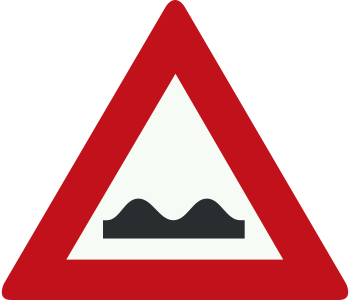 J1 · Uneven roadA broken surface cuts your grip and lengthens your braking.
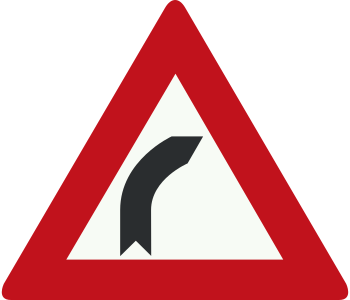 J2 · Bend to the rightBrake before the bend, not in it, and look through the corner.
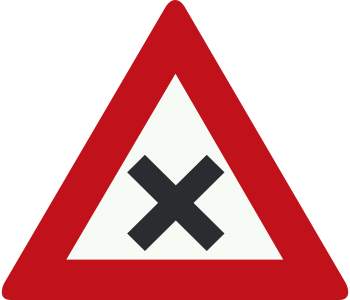 J8 · Dangerous crossroadsWithout other signs, priority to the right applies — cover the brake.
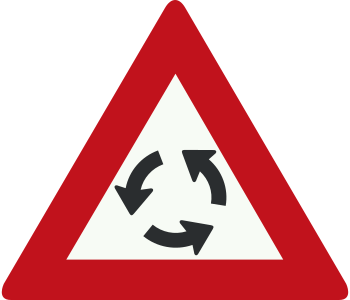 J9 · Roundabout aheadChoose your lane and your speed before you reach the shark's teeth (haaientanden).
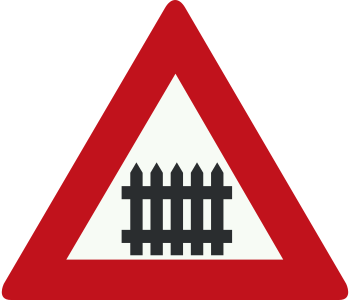 J10 · Level crossing with barriersNever enter unless you can clear the far side completely.
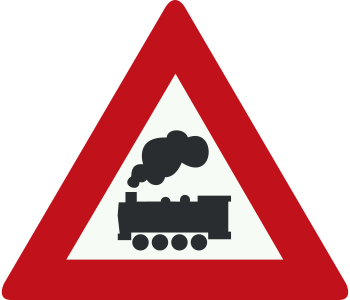 J11 · Level crossing without barriersLook and listen yourself. Two tracks can mean a second train.
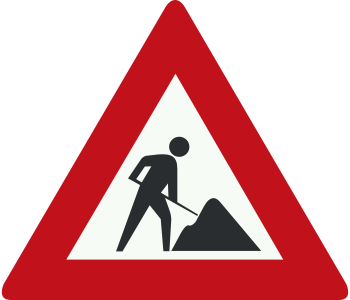 J16 · Road worksExpect people on the carriageway, temporary limits and loose surfaces.
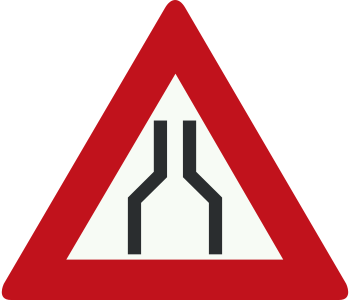 J17 · Road narrows on both sidesDecide early who fits through first, and be ready to wait.
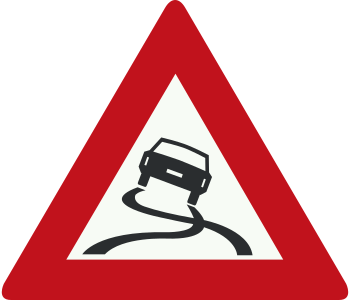 J20 · Slippery roadEverything gentle: no sudden steering, braking or accelerating.
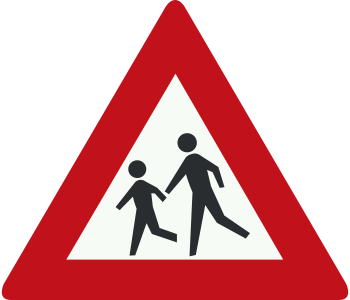 J21 · ChildrenSchools and playgrounds. Cover the brake and cut your speed.
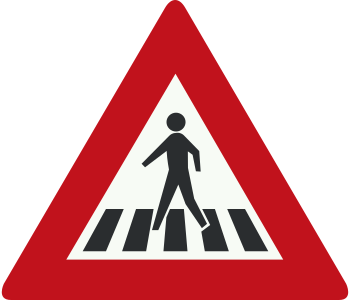 J22 · Pedestrian crossing aheadNever overtake a vehicle just before or on a zebra crossing, even if it is still moving (art. 12).
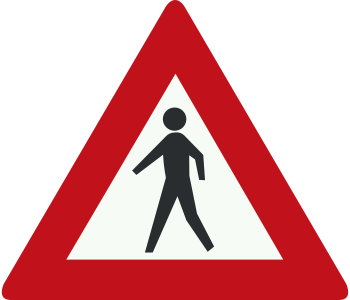 J23 · PedestriansOften where there is no pavement, so people walk in the road itself.
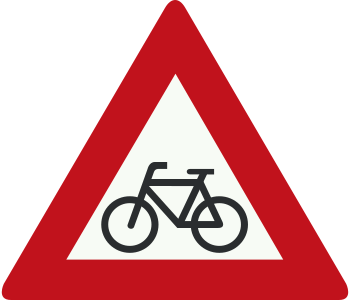 J24 · Cyclists and moped ridersCheck the blind spot before you turn across their path.
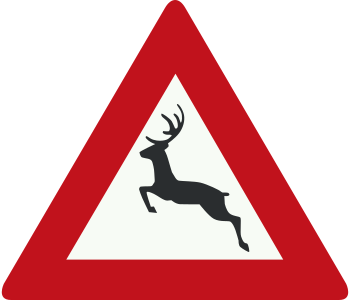 J27 · Large wild animalsDawn and dusk are the risk hours. Brake, do not swerve.
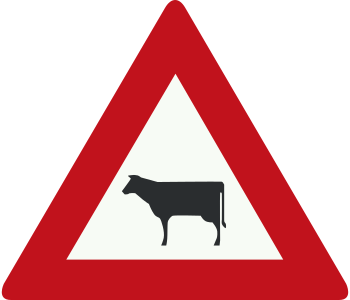 J28 · LivestockPass slowly and quietly, and do not use the horn.
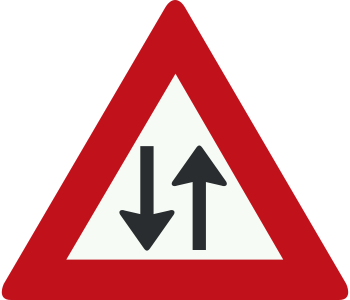 J29 · Oncoming trafficA one-way section is ending — expect oncoming traffic again.
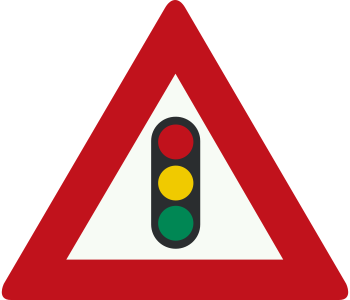 J32 · Traffic lights aheadOften placed where the lights are hidden by a bend or a crest.
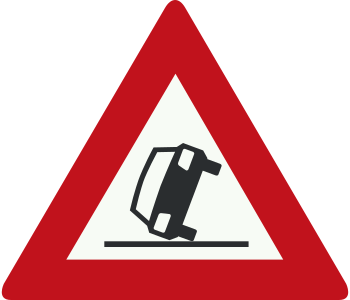 J34 · AccidentAn accident ahead. Slow down and be ready to stop.
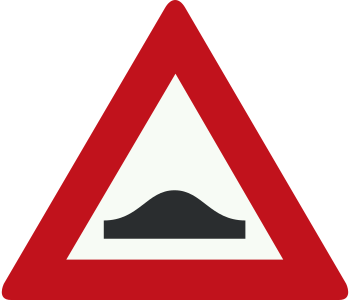 J38 · Speed bumpCross it slowly and squarely, especially with a loaded car or a trailer.
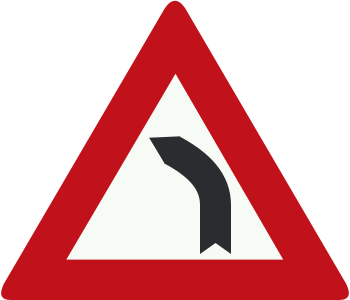 J3 · Bend to the leftBrake before the bend and keep to the right; oncoming drivers may cut the corner.
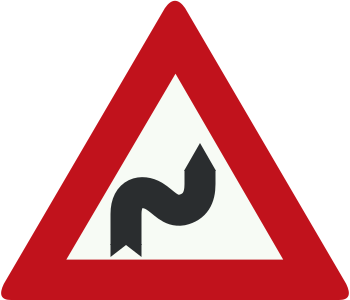 J4 · Double bend, first to the rightBends follow one after another, the first to the right: pick a speed beforehand that suits all of them.
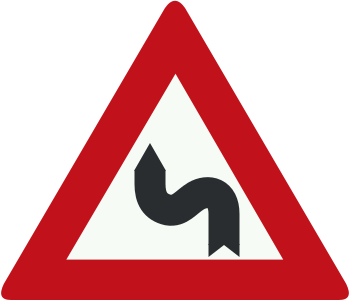 J5 · Double bend, first to the leftBends follow one after another, the first to the left: pick a speed beforehand that suits all of them.
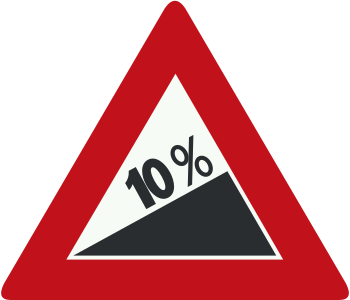 J6 · Steep hill upwardsA steep climb: shift down in good time and allow for a limited view over the top.
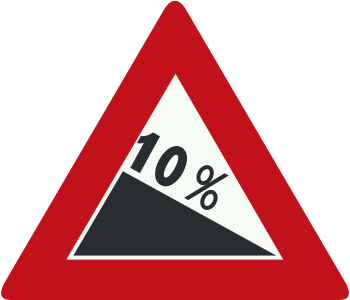 J7 · Dangerous descentUse engine braking in a low gear so your brakes do not overheat.
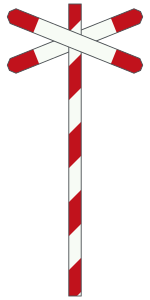 J12 · Level crossing with a single trackThe cross stands at the crossing itself. Only go onto it if you can drive straight on and clear it completely.
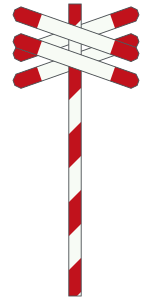 J13 · Level crossing with two or more tracksAfter one train another may follow; let every train go first and wait until all is clear.
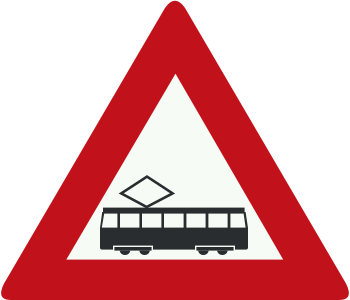 J14 · Tram crossingAt a junction without signs or traffic lights you give way to the tram, even when it comes from the left.
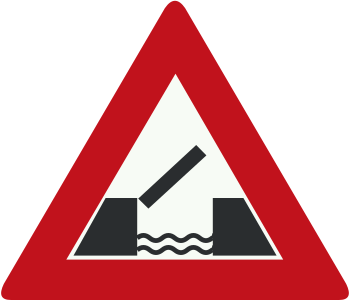 J15 · Movable bridgeThe bridge may open: stop at a red or flashing red bridge light.
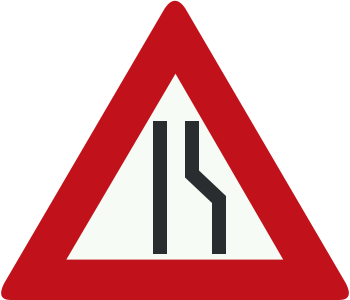 J18 · Road narrows on the rightThe carriageway narrows on the right-hand side: slow down and watch the traffic beside you.
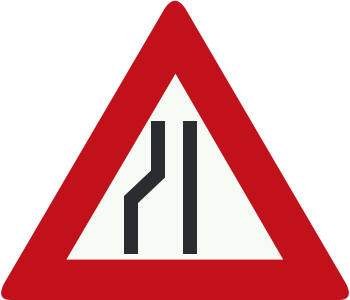 J19 · Road narrows on the leftThe carriageway narrows on the left-hand side: slow down and watch the traffic beside you.
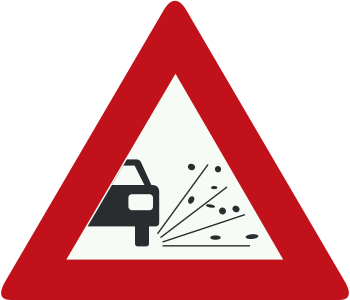 J25 · Loose chippingsDrive slowly and keep your distance so flying stones do not hit windows or paint.
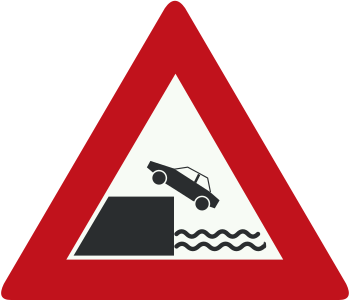 J26 · Quayside or river bankThe road may end at the water: drive slowly, especially in the dark or when it is slippery.
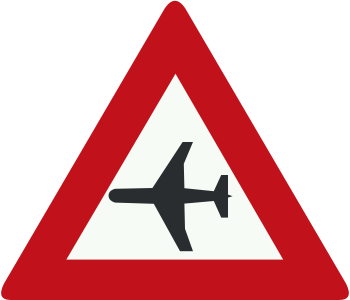 J30 · Low-flying aircraftA sudden loud noise may startle you; keep your attention on the road.
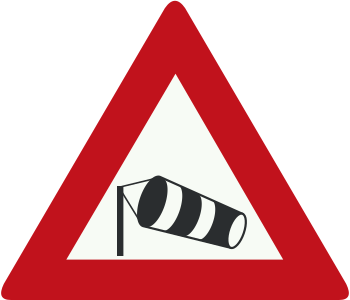 J31 · Side windHold the wheel firmly, especially on open stretches and bridges; a gust can push you sideways.
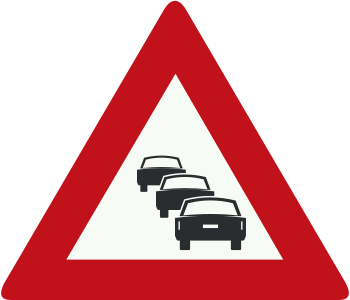 J33 · Queues likelyTraffic ahead may be at a standstill: slow down in good time and keep your distance.
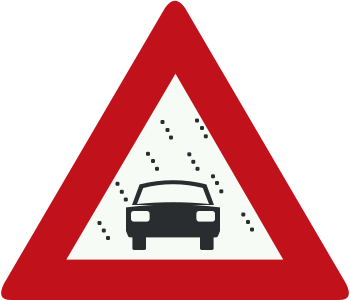 J35 · Poor visibility due to snow, rain or fogThe rear fog light is only allowed in fog or falling snow with visibility under 50 metres, not in rain.
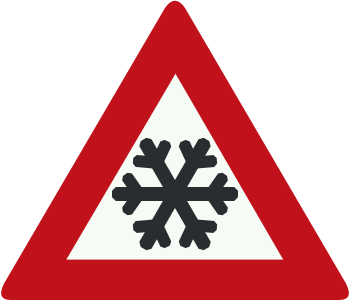 J36 · Ice or snowYour braking distance can become much longer: drive slower, keep more distance, and steer, brake and accelerate gently.
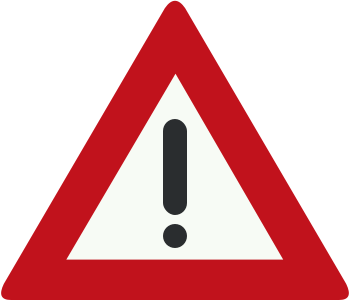 J37 · Danger (type shown on the sub-plate)The sub-plate tells you what danger is ahead: read it and adjust your speed.
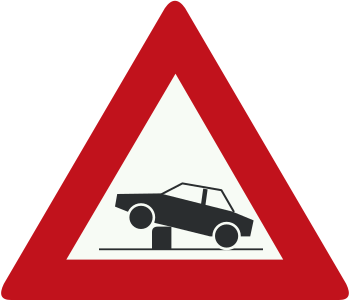 J39 · Retractable bollard (poller) in the carriagewayNever follow another vehicle closely through the gap: the bollard can rise.
What you do in practice
- See a warning sign? Ease off and look where the hazard is.
- At sign J37 the sub-plate says what kind of hazard is coming: read it.
- At a level crossing (overweg) without barriers (J11) you need to be extra careful: watch the lights and the train.
The mistake many people make
Thinking a warning sign gives you priority or a rule. It only warns: other signs and shark's teeth regulate priority.
The Dutch terms
| Dutch | English |
|---|---|
| overweg | level crossing |
| zebrapad | zebra crossing |
| tram | tram |
The rule in the law
More in this guide
Practise every sign with questions like in the exam.
Start freeTheorieWin is not the CBR and does not book exams. What cbr.nl says always applies.