
Signs that look alike
Many mistakes in the exam come from signs that look alike. Below are 8 pairs, each with the difference in one sentence. The signs are shown in that order too, two by two.
The signs
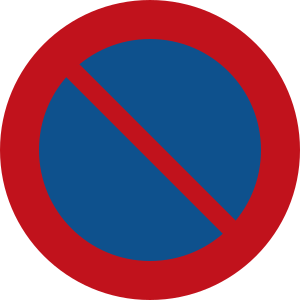 E1 · No parking (parkeerverbod)Brief stops (stilstaan) to load or let people in and out are still allowed.
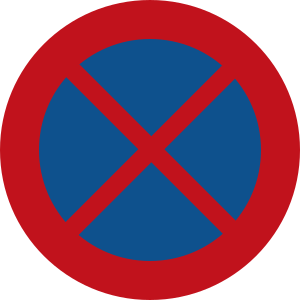 E2 · No stopping (verbod stil te staan)Stricter than E1: you may not even halt briefly.
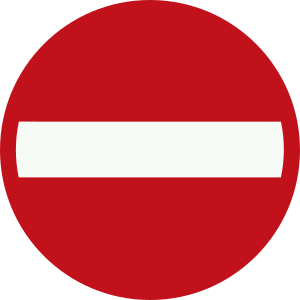 C2 · No entry in this directionYou are at the wrong end of a one-way street. The other end carries C3.
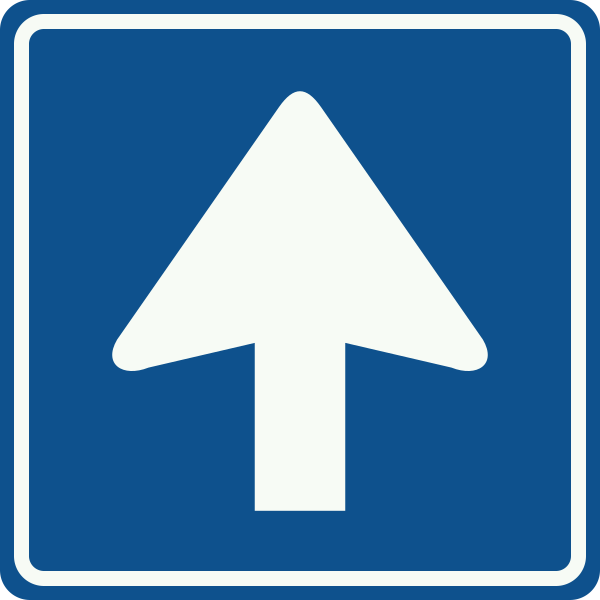 C3 · One-way roadTraffic flows only in the direction of the arrow.
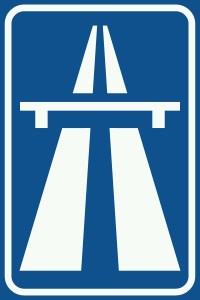 G1 · Start of motorway (autosnelweg)At most 130 km/h, on most stretches 100 km/h by day (06:00-19:00) as the signs show; your vehicle must be able and allowed to do at least 60 km/h.
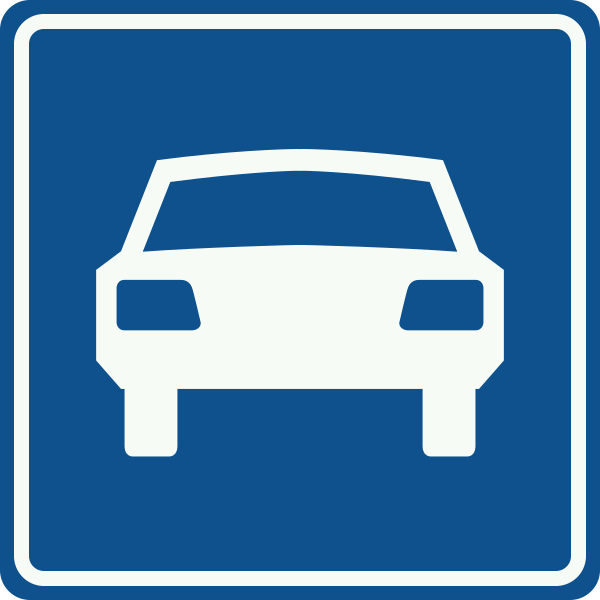 G3 · Start of expressway (autoweg)100 km/h unless signed lower; only for motor vehicles that can and may do at least 50 km/h.
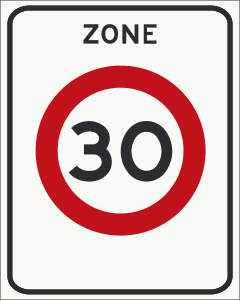 A1 zone · Start of a 30 km/h zoneA zone covers every street inside it, junctions included, until the end sign.
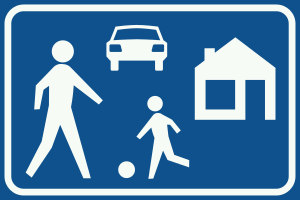 G5 · Start of a home zone (erf)15 km/h, pedestrians may use the full width, and you park only in marked bays.
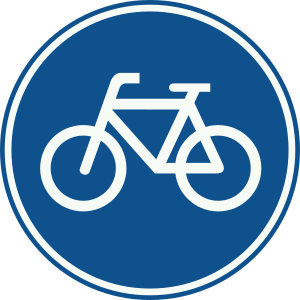 G11 · Compulsory cycle path (fietspad)Cyclists must use it (snorfietsers too, unless a sub-plate says otherwise); cars, motorcycles and mopeds (bromfietsen) may not.
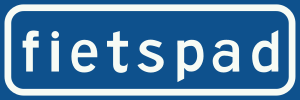 G13 · Non-compulsory cycle path (fietspad)Cyclists may choose it or the road. Cars still may not use it.
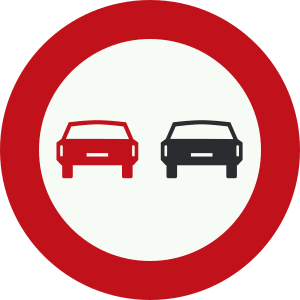 F1 · No overtaking for motor vehiclesYou may overtake a bicycle, a moped (bromfiets) or a light moped (snorfiets): they are not motor vehicles. Motor vehicles, such as a tractor or a motorcycle, and also a microcar (brommobiel, art. 2a), you may not.
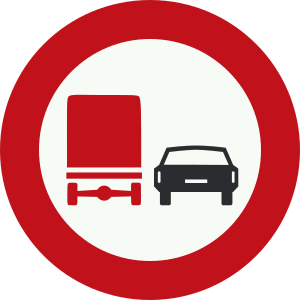 F3 · No overtaking for lorriesLorries may not overtake other motor vehicles; cars may still overtake.
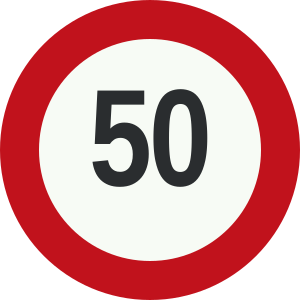 A1 · Maximum speed 50 km/hThe default inside the built-up area, though many streets are signed 30.
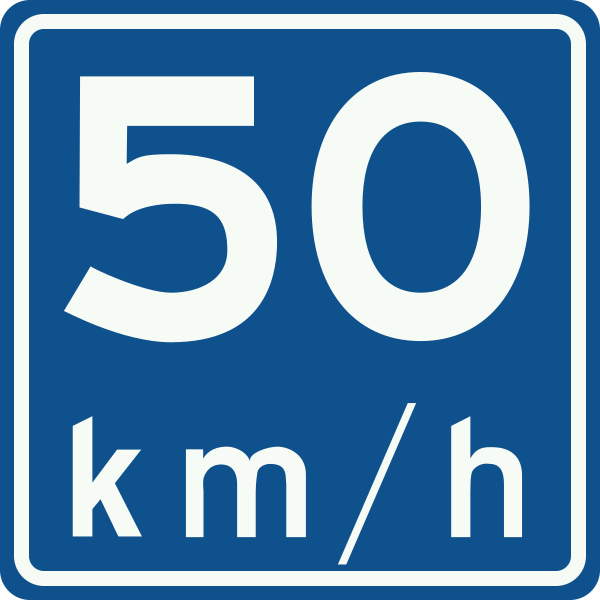 A4 · Advisory speedBlue and square means advice, not a limit — but it is warning you about the road ahead.
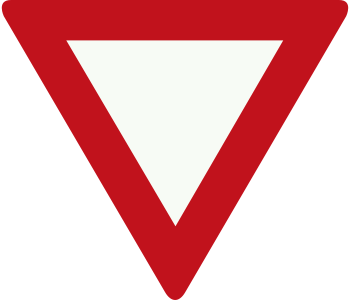 B6 · Give way to traffic on the crossing roadNo need to stop if the road is clear, but you yield to every driver on it.
 B7 · Stop (stilstaan), then give wayA full stop at the line is compulsory, even on a completely empty road.
What you do in practice
- E1 or E2: at E1 you may not park (parkeren), but you may stop (stilstaan) briefly; at E2 not even stopping is allowed.
- C2 or C3: C3 stands at the start of a one-way street, C2 at the end: there you may not drive in.
- G1 or G3: G1 is the motorway (autosnelweg), G3 the expressway (autoweg). They are different roads with different rules.
- 30 zone or G5: in a 30 zone you may drive 30 km/h and pedestrians walk on the pavement; in a home zone (erf) you drive 15 km/h and pedestrians may use the whole road.
- G11 or G13: cyclists must use the compulsory cycle path (fietspad) and may choose at the non-compulsory one; in a car you may use neither.
- F1 or F3: at F1 nobody may overtake a motor vehicle; at F3 the overtaking ban only applies to lorries (vrachtauto).
- A1 or A4: round with a red edge is a speed limit; blue and square is an advisory speed.
- B6 or B7: at B6 you may carry on if the road is clear; at B7 you always stop first.
The Dutch terms
| Dutch | English |
|---|---|
| parkeren | parking |
| stilstaan | stopping (standing still) |
| autosnelweg | motorway |
| autoweg | expressway |
| erf | home zone |
The rule in the law
More in this guide
Practise every sign with questions like in the exam.
Start freeTheorieWin is not the CBR and does not book exams. What cbr.nl says always applies.