
Information signs
The information signs (group L) tell you something about the road: here is a zebra crossing, a bus stop, a dead end or an emergency lay-by. They are usually blue and rectangular. Some do change how you drive, such as end of lane (L5): then you must move to another lane in time.
The signs
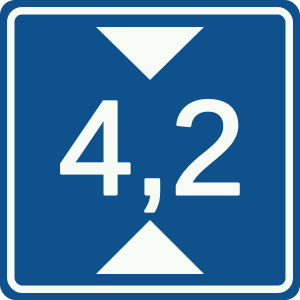 L1 · Headroom under a bridge or overpassInformation on the clearance, not a ban like C19: know how tall your car is with a roof box or load.
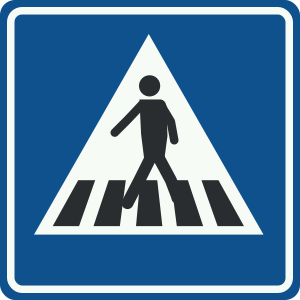 L2 · Pedestrian crossing hereLet pedestrians who are crossing or about to cross go first, and do not stop on it or within 5 metres of it.
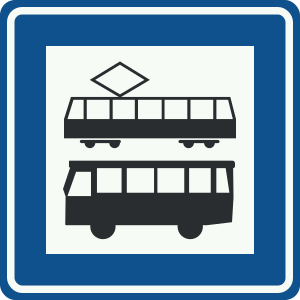 L3 · Bus stop / tram stopWithout block markings you may not stop (stilstaan) within 12 metres of this sign, except to let passengers get in or out at once.
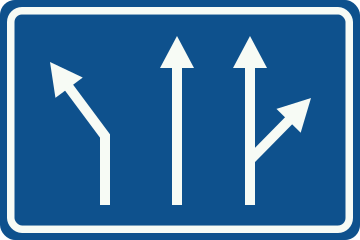 L4 · Get in laneChoose the lane for your direction in good time, as the arrows show.
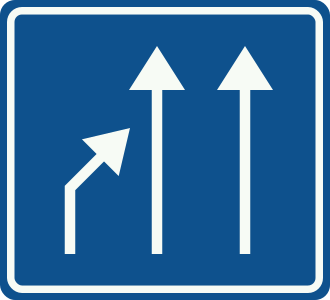 L5 · Lane endsA lane comes to an end: merge in good time and let traffic in the other lane go first.
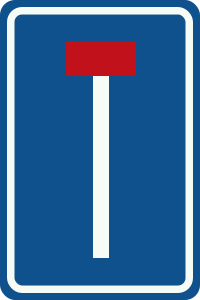 L8 · Dead endYou cannot drive on at the end; you have to come back the same way.
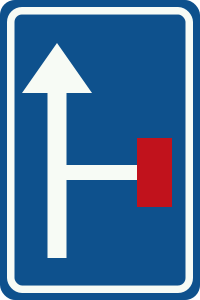 L9 · Dead end ahead (advance sign)The road with the red bar on the sign is a dead end; choose the other direction in time if you want to go on.
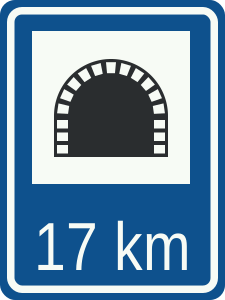 L13 · Road tunnelYou may not stop (stilstaan) your car in a tunnel; keep extra distance from the vehicle ahead.
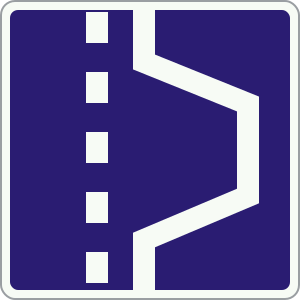 L14 · Emergency lay-byUse it only in an emergency, such as a breakdown; not for a short stop or a break.
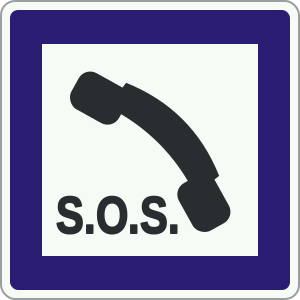 L16 · Emergency telephoneA telephone here lets you call for help after a breakdown or an accident.
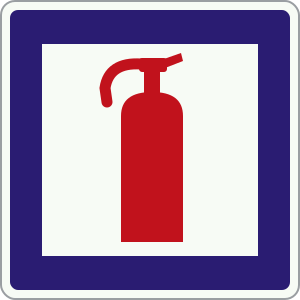 L17 · Fire extinguisherA fire extinguisher is kept here for you to use on a fire that is just starting.
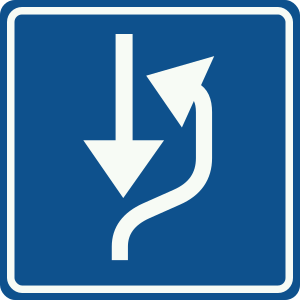 L20 · Pull-in place on the right of the roadOn a narrow road you can pull in to the right here so that oncoming vehicles can get past each other.
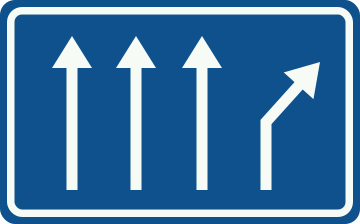 L6 · Road splits aheadThe road splits further on; get into the lane for your direction in good time and do not change lanes at the last moment.
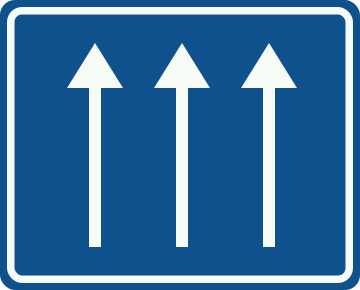 L7 · Number of through lanesThe number of arrows shows how many lanes go straight on; check whether your lane continues.
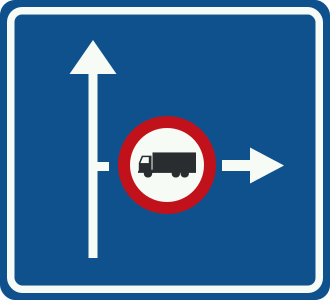 L10 · Advance notice of a traffic measure for the direction shownThe ban or obligation on the sign applies in the direction of the arrow; choose another route in good time if it applies to you.
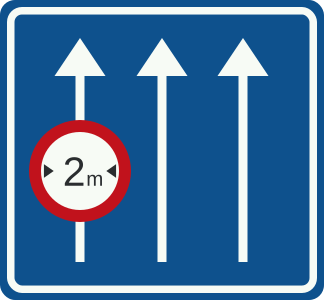 L11 · Sign applies only to the lane or lanes shownThe sign shown with a lane arrow applies only to that lane; it does not apply in the other lanes.
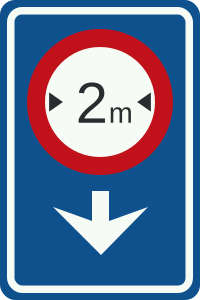 L12 · Sign applies only to the lane belowThe sign above the arrow applies only to the lane the arrow points to, not to the lanes beside it.
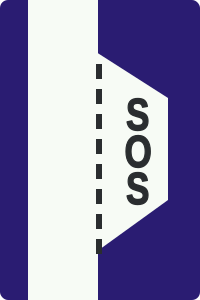 L15 · Emergency lay-by with emergency telephone and fire extinguisherUse it only in an emergency; you can call for help on the emergency telephone here and a fire extinguisher is kept here.
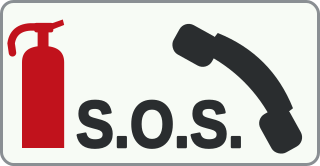 L18 · Emergency telephone and fire extinguisherHere you can call for help after a breakdown or an accident and put out a fire that is just starting.
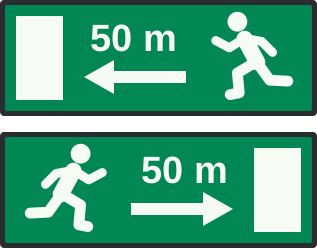 L19 · Nearest exit or exitsIn an emergency this shows you the direction and distance to the nearest exit.
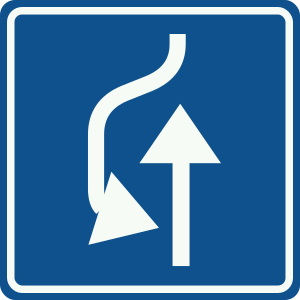 L21 · Pull-in place on the left of the roadOn a narrow road there is a place on the left here to pull in, so that oncoming vehicles can get past each other.
What you do in practice
- At L2 there is a zebra crossing (zebrapad): let pedestrians who are crossing or about to cross go first.
- At get in lane (L4) you choose the lane for the direction you want in time.
- At L11 and L12 a sign only applies to the lane with the arrow.
The mistake many people make
Thinking an information sign asks nothing of you. A zebra crossing (L2) or end of lane (L5) does ask something of you.
The Dutch terms
| Dutch | English |
|---|---|
| zebrapad | zebra crossing |
| vluchtstrook | hard shoulder |
The rule in the law
More in this guide
Practise every sign with questions like in the exam.
Start freeTheorieWin is not the CBR and does not book exams. What cbr.nl says always applies.