
Signs for types of road
These blue rectangular signs tell you what kind of road you are on, and so which rules apply. The motorway (autosnelweg, G1) and the expressway (autoweg, G3) are only for fast motor vehicles. In a home zone (erf, G5) you drive at 15 km/h at most and pedestrians may use the whole road. The place-name sign (H1) marks the start of the built-up area.
The signs
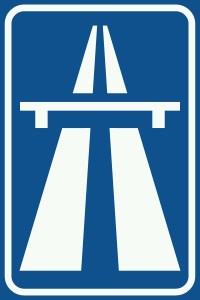 G1 · Start of motorway (autosnelweg)At most 130 km/h, on most stretches 100 km/h by day (06:00-19:00) as the signs show; your vehicle must be able and allowed to do at least 60 km/h.
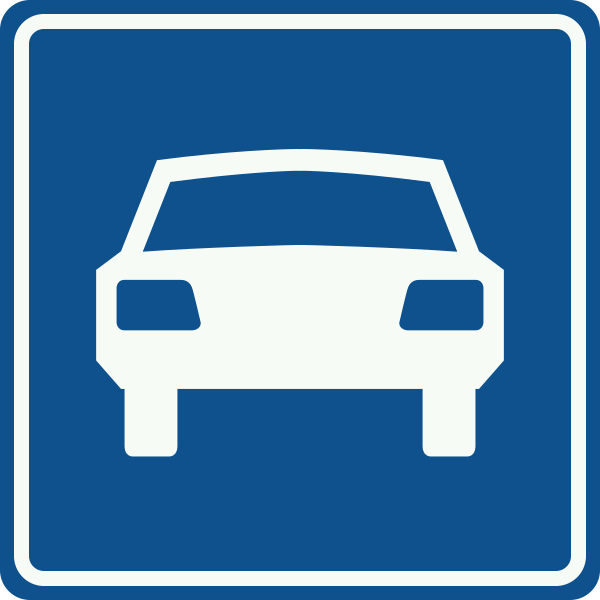 G3 · Start of expressway (autoweg)100 km/h unless signed lower; only for motor vehicles that can and may do at least 50 km/h.
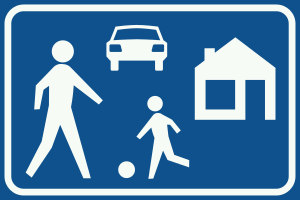 G5 · Start of a home zone (erf)15 km/h, pedestrians may use the full width, and you park only in marked bays.
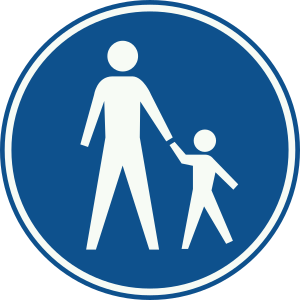 G7 · FootpathFor pedestrians. A disabled person's vehicle such as a mobility scooter may use it too (at most 6 km/h); you may not ride or drive on it with a car, bicycle or moped (bromfiets).
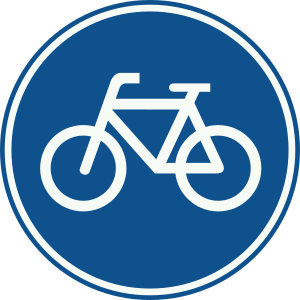 G11 · Compulsory cycle path (fietspad)Cyclists must use it (snorfietsers too, unless a sub-plate says otherwise); cars, motorcycles and mopeds (bromfietsen) may not.
 G13 · Non-compulsory cycle path (fietspad)Cyclists may choose it or the road. Cars still may not use it.
 H1 · Start of built-up area50 km/h by default, and you let a bus at a stop pull out when it signals.
 H2 · End of built-up areaFrom here the limit is normally 80 km/h.
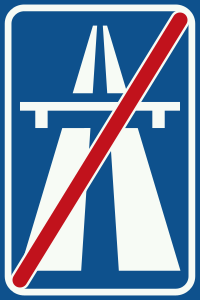 G2 · End of motorway (autosnelweg)From here the motorway rules no longer apply; check which maximum speed applies now.
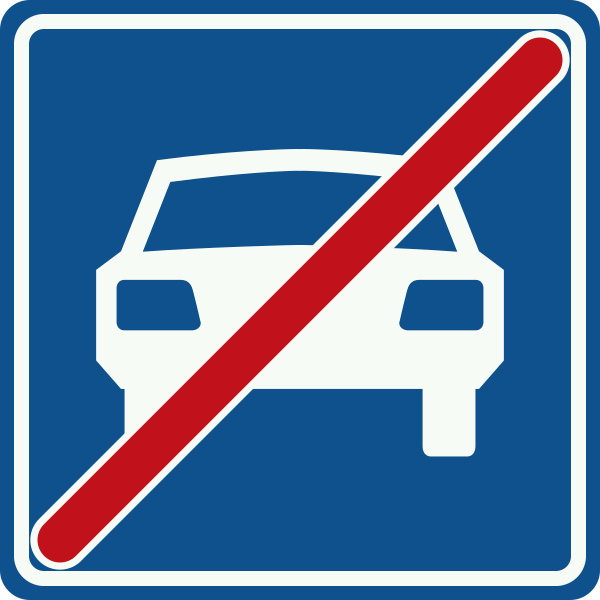 G4 · End of expressway (autoweg)The expressway rules end: now expect slower traffic too, such as tractors or microcars (brommobielen).
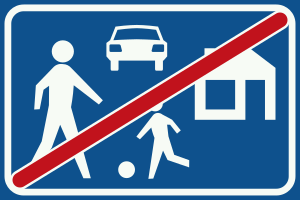 G6 · End of home zone (erf)The 15 km/h limit ends and pedestrians may no longer use the full width of the road.
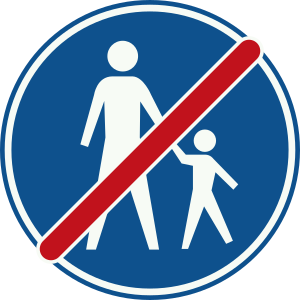 G8 · End of footpathFrom here the path is no longer reserved for pedestrians.
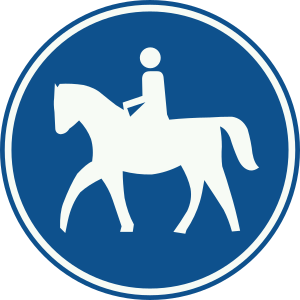 G9 · Bridle pathFor horse riders only; you may not drive on it with your car.
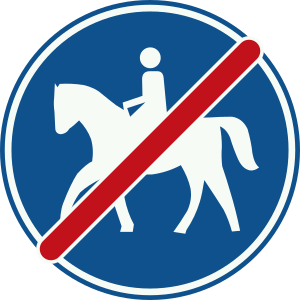 G10 · End of bridle pathRiders now use the verge or the carriageway: expect horses on the road and pass calmly.
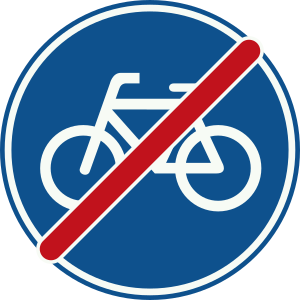 G12 · End of compulsory cycle path (fietspad)From here cyclists may ride on the carriageway: expect cyclists beside your car.
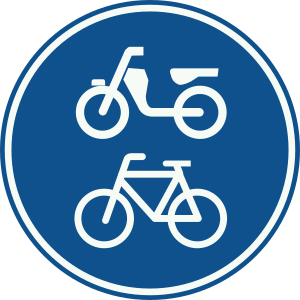 G12a · Cycle/moped path (fiets/bromfietspad)Cyclists and moped riders must use this path; you may not drive on it with your car.
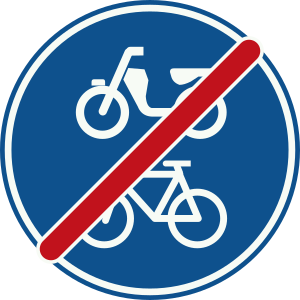 G12b · End of cycle/moped path (fiets/bromfietspad)From here moped riders usually move onto the carriageway: expect them beside or in front of your car.
 G14 · End of non-compulsory cycle path (fietspad)From here cyclists join the carriageway: leave enough room when you overtake them.
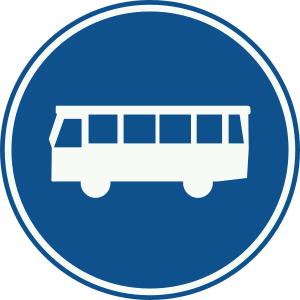 F13 · Bus road or lane (scheduled buses only)You may not drive here with your car, and you may not stop (stilstaan) on the carriageway next to a bus lane.
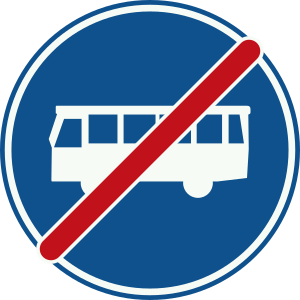 F14 · End of bus road or laneFrom here the road or lane is no longer reserved for scheduled buses; watch for buses merging.
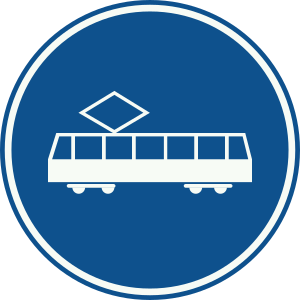 F15 · Tram road or laneOnly trams may use this road or lane; you do not drive on it with your car.
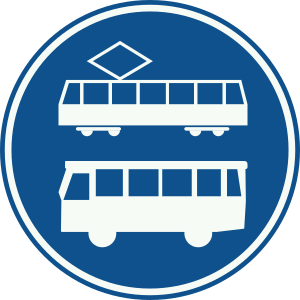 F17 · Bus and tram road or laneOnly scheduled buses and trams may use this road or lane; your car may not.
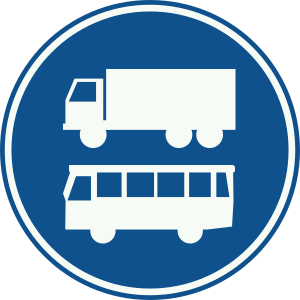 F19 · Road or lane for lorries and scheduled busesA car may not drive here, nor may a van (bestelauto): it is not a lorry (vrachtauto).
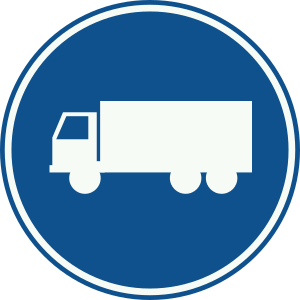 F21 · Road or lane for lorries (vrachtauto’s)Only lorries may use this road or lane; your car may not.
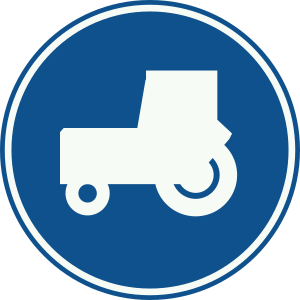 F11 · Compulsory slow lane for tractors, mmbs and mobile machineryThese slow vehicles must move over here so they can be overtaken; you do not drive on it with your car.
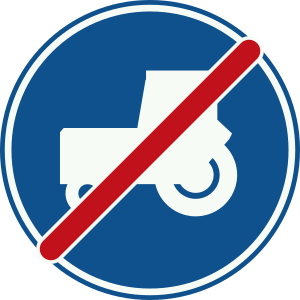 F12 · End of compulsory slow lane for tractors, mmbs and mobile machineryFrom here tractors and other slow vehicles drive in the normal lane again: expect them in front of your car.
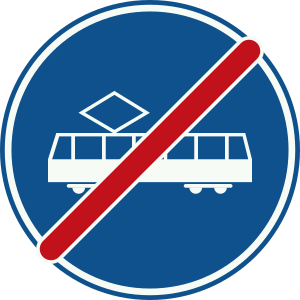 F16 · End of tram road or laneFrom here the road or lane is no longer reserved for trams: expect trams on the same carriageway as you.
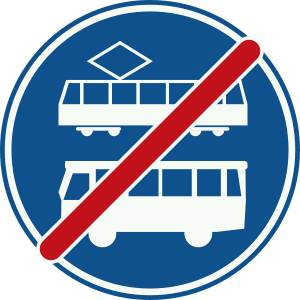 F18 · End of bus and tram road or laneFrom here the road or lane is no longer reserved for scheduled buses and trams; watch for buses and trams joining your carriageway.
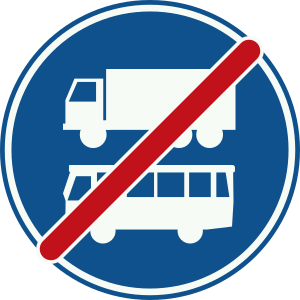 F20 · End of road or lane for lorries and scheduled busesFrom here the road or lane is no longer reserved for lorries (vrachtauto’s) and scheduled buses; watch for vehicles merging.
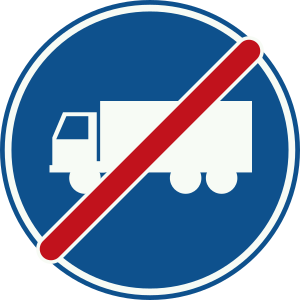 F22 · End of road or lane for lorries (vrachtauto’s)From here the road or lane is no longer reserved for lorries; watch for lorries merging.
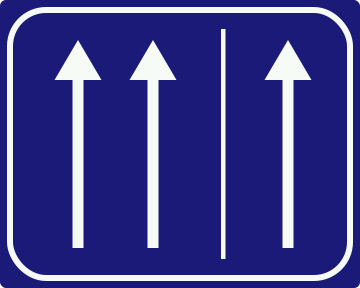 C23-01 · Peak-hour lane (spitsstrook) openThe hard shoulder (vluchtstrook) is now a lane you may drive in; without this sign it is for emergencies only.
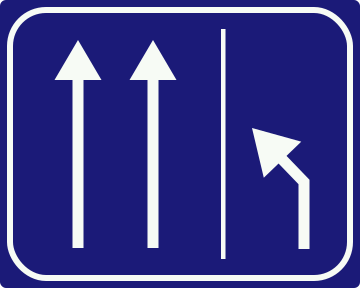 C23-02 · Clear the peak-hour lane (spitsstrook)Leave the peak-hour lane: move to the lane on its left in good time and let traffic there go first.
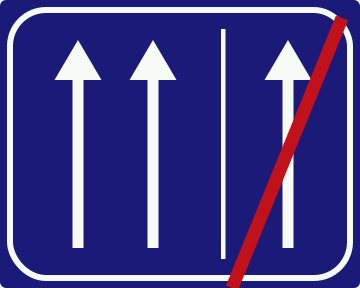 C23-03 · End of peak-hour lane (spitsstrook)After this it is a hard shoulder (vluchtstrook) again, for emergencies only: move to the lane on its left in good time.
What you do in practice
- Every sign has an end sign: after end of expressway or end of home zone the normal rules apply again.
- You may not drive a car on a compulsory cycle path (fietspad, G11); not on a non-compulsory cycle path (G13) either.
- You may only use a peak-hour lane (spitsstrook) when the peak-hour-lane-open sign (C23-01) says so.
The mistake many people make
Mixing up the expressway and the motorway. They are two different types of road, with their own signs and their own rules.
The Dutch terms
| Dutch | English |
|---|---|
| autosnelweg | motorway |
| autoweg | expressway |
| erf | home zone |
| fietspad | cycle path |
| bebouwde kom | built-up area |
The rule in the law
More in this guide
Practise every sign with questions like in the exam.
Start freeTheorieWin is not the CBR and does not book exams. What cbr.nl says always applies.